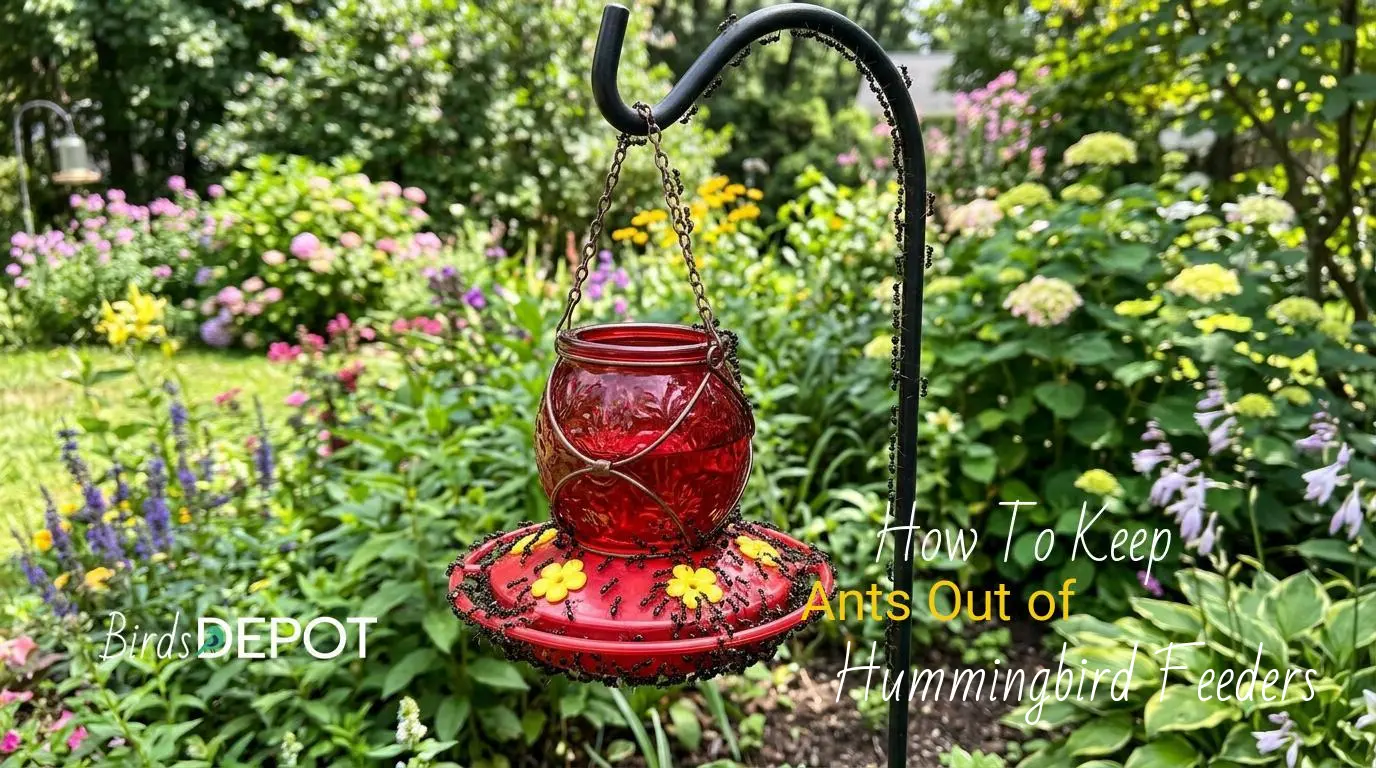
I refilled my hummingbird feeder on a Tuesday morning, and by Thursday afternoon, it was crawling with ants. Not a few stragglers. A full column, marching up the shepherd’s hook, over the hanger, and down into the feeding ports. The hummingbirds I’d been watching all week had vanished completely.
That sent me down a research rabbit hole, and into a long thread on a birding forum where the same frustration came up again and again. Learning how to keep ants out of hummingbird feeders turns out to be one of the most common problems in backyard birding, and the solutions range from genuinely effective to actively dangerous for the birds you’re trying to feed. Here is what actually works.
Why Ants Target Hummingbird Feeders
Ants are wired to find sugar. The nectar in a hummingbird feeder, typically a one-to-four ratio of white sugar to water, is exactly what they’re searching for. Once a scout ant locates the source, it leaves a chemical scent trail back to the colony. Within hours, you can have a full foraging line working the feeder.
Any drip or residue on the outside of the feeder makes this worse. A single overfilled port leaves sticky nectar on the surface, and that’s enough to send the signal. Feeders in direct sun also tend to expand slightly and push nectar out through the seams, which I noticed with a glass feeder I had on my south-facing balcony one summer.
The other factor is location. Ants can scale a metal pole without any trouble. A smooth vertical surface is not a barrier for them.
What Works and What to Avoid
Before getting into specific methods, there is one thing the birding community is very clear on: never use Vaseline, petroleum jelly, cooking oil, or any greasy substance on your feeder pole or hanger to stop ants. The idea is that ants can’t cross the slippery surface, and it does work as a deterrent. But if even a small amount transfers onto a hummingbird’s feathers or wings, it interferes with their ability to fly and preen. That is as serious as it sounds.
Insecticides are equally off the table. Even trace amounts near the feeder can kill a hummingbird.
What does work relies on physical barriers, scent deterrents, and management habits that remove the attractant in the first place. None of these methods harm the birds.
What You’ll Need
Depending on which methods you use, gather the following before you start:
- An ant moat (purpose-built or DIY from a plastic bottle)
- Heavy monofilament fishing line (at least 30lb test to support feeder weight)
- Small pieces of brightly coloured ribbon
- Peppermint or spearmint essential oil
- Fresh mint in a container pot (spearmint or peppermint)
- Mild dish soap and white vinegar for cleaning
- A small saucer or dish for essential oil placement
7 Methods That Actually Stop Ants
1. Install an Ant Moat
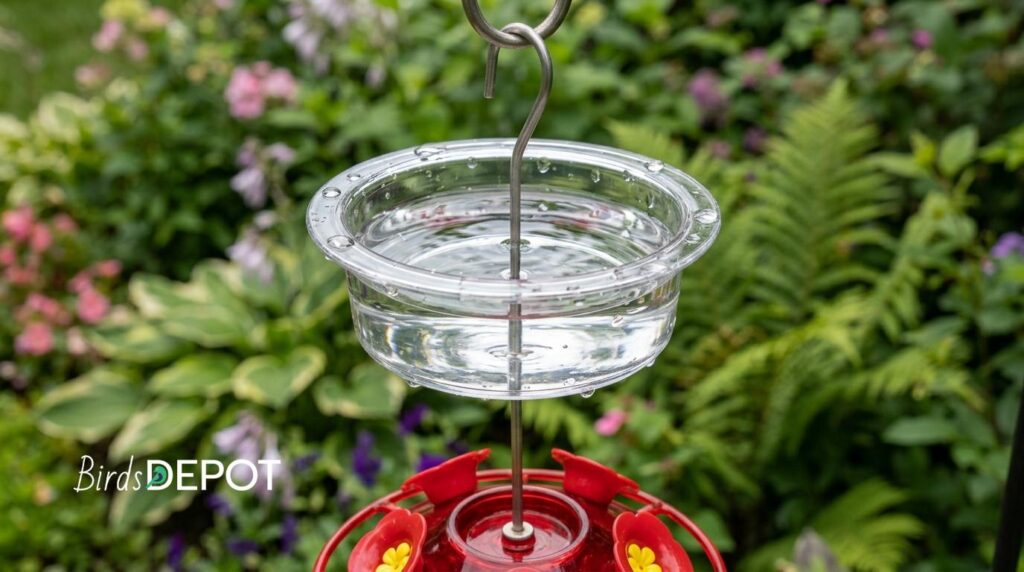
An ant moat is a small basin that hangs above the feeder and holds water. Ants cannot swim, so they stop at the water barrier and turn back. This is the single most reliable solution I have found, and it is what most serious hummingbird feeders use as their first line of defence.
You can buy ant moats separately or choose a feeder with one built in. The catch is that moats dry out quickly in warm weather, sometimes within a day in full sun. You need to check and refill it every time you check the feeder.
A fellow birder in my local group showed me a DIY version made from a two-litre plastic bottle with the top cut off and a coat hanger threaded through the cap. It holds significantly more water than the small commercial moats and only needs refilling every few days. For anyone who keeps forgetting to top up a standard moat, this is worth building.
2. Switch to Fishing Line for Hanging
Ants cannot grip monofilament fishing line. The surface is too thin and too smooth. Replacing a wire hanger or chain with a length of strong fishing line cuts off their access route before they even get close to the feeder.
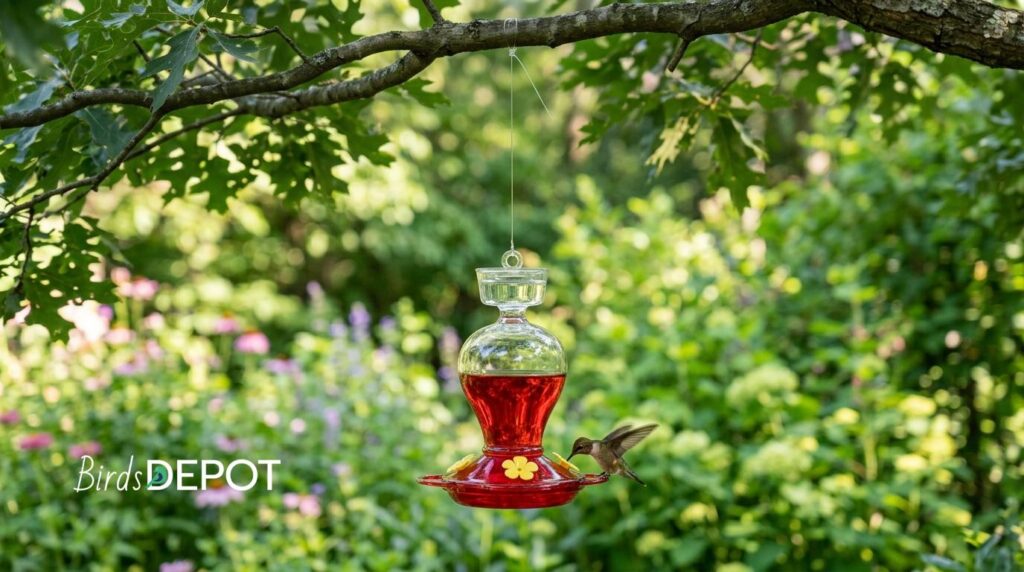
Use at least 30lb test so it holds the weight safely. Tie small pieces of brightly coloured ribbon along the line so it stays visible to people and pets walking nearby. Invisible lines at head height are a hazard.
Hang the line from a tree branch or gutter overhang if possible. Ants are far less likely to drop from a branch to reach a feeder than they are to climb a pole from the ground up.
3. Keep the Feeder Spotlessly Clean
A clean feeder sends no signal. Any nectar residue on the outside of the feeder is an open invitation. Wash the feeder with mild dish soap and warm water every time you refill it. For feeders that develop a sticky film, a small amount of white vinegar helps cut through the residue and tackles bacteria at the same time.
Let the feeder dry completely before refilling. Filling it while it is still damp dilutes the nectar and speeds up fermentation, which makes hummingbirds sick. This is one of those habits that protects the birds on multiple levels. Read the guide on how to prevent and clean mold from a hummingbird feeder.
4. Move the Feeder Regularly
Ants communicate food source locations to their colony through scent trails. If you move the feeder before a full trail gets established, the ants lose the location. Even shifting it a few feet breaks the pattern.
If you have multiple feeders, rotate them around the garden every time you clean and refill them. Hummingbirds adapt quickly and will find the feeder again within a few minutes. Ants, according to what keeps coming up in birding communities, do not bother to search for a source that has moved.
5. Use Peppermint as a Natural Repellent
Ants dislike the smell of mint strongly enough to avoid it. There are a few ways to use this. Rub fresh mint leaves directly onto the pole, hook, and outer surface of the feeder. Place a pot of spearmint or peppermint near the base of the pole. Or dilute peppermint essential oil in water and spray the ground around the pole base.
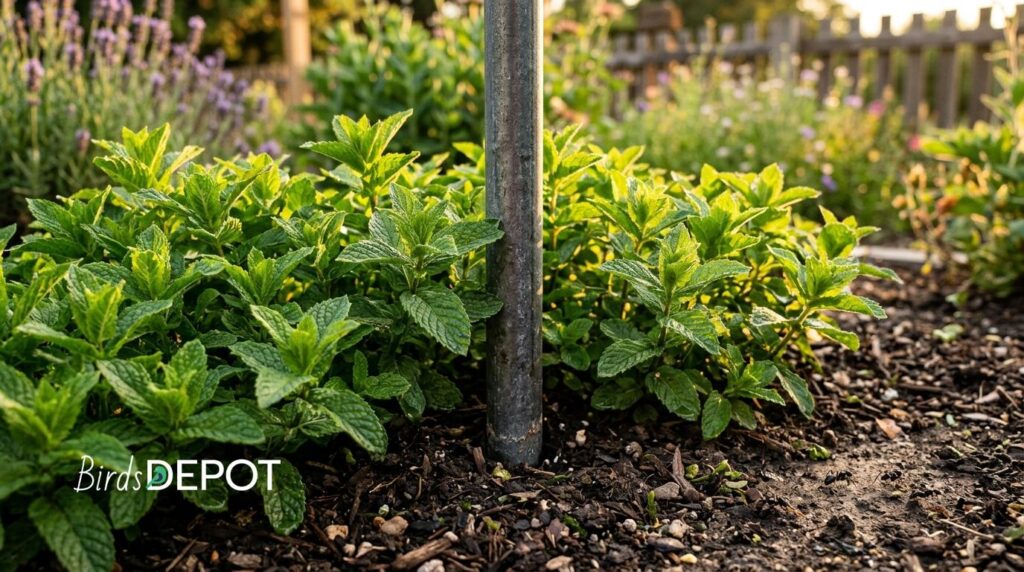
Grow mint in a container rather than directly in the garden bed. As you can see in the photos, it spreads aggressively and will take over a border if planted in open soil. A large pot near the feeder post works well and keeps it contained.
6. Choose the Right Feeder Design
Saucer-style feeders have a design advantage over bottle-style feeders. The nectar sits in a shallow basin below the feeding ports rather than above them, which means the feeder relies on the hummingbird’s long tongue rather than gravity to deliver nectar. This design drips far less, which reduces the sugary residue that draws ants.
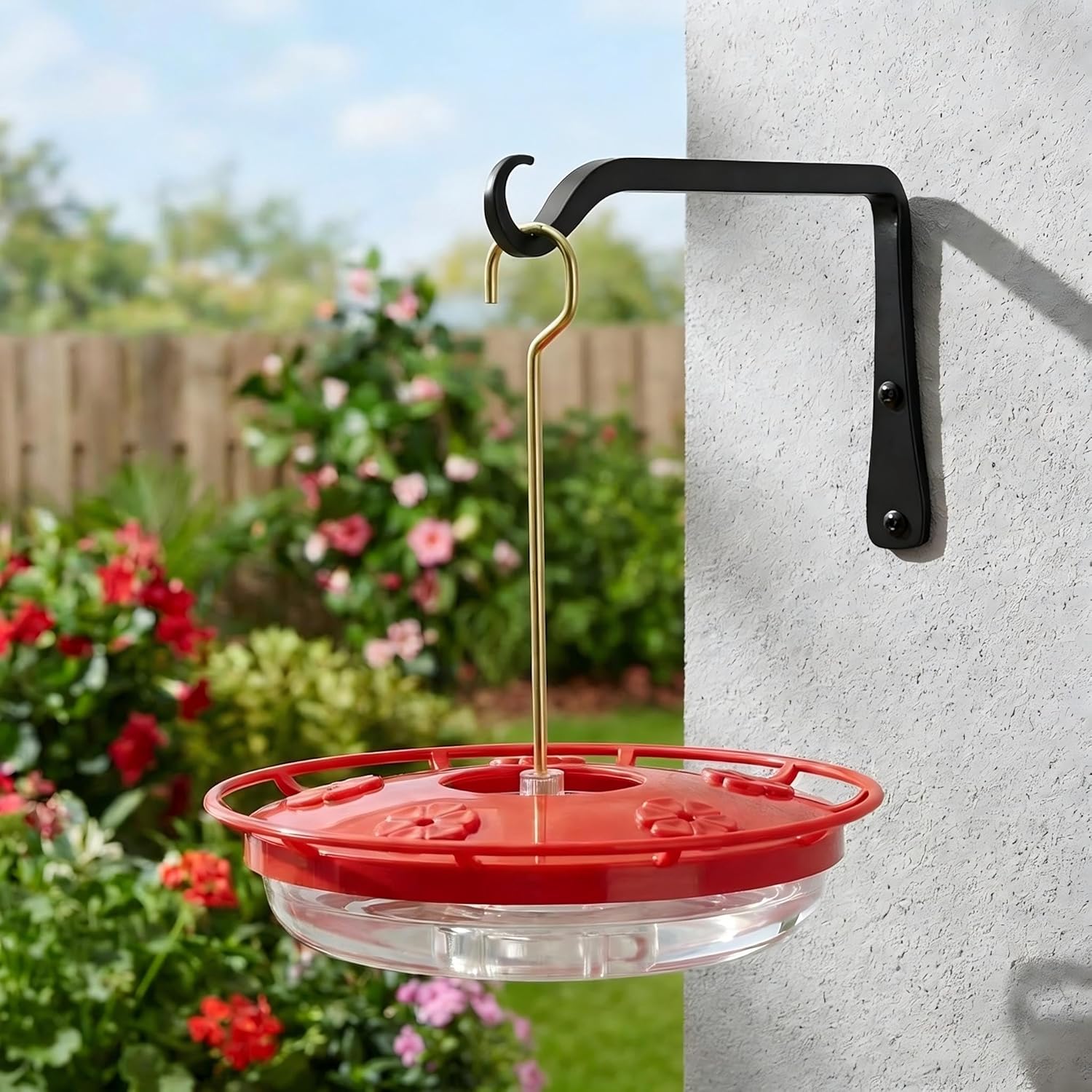
FEED GARDEN Hummingbird Feeders for Outdoors
Best Compact Option
Compact 16 oz feeder with 4 metal flower feeding ports, built-in ant moat, and BPA-free base providing perfect portion control and reliable bee protection
Saucer feeders are also easier to clean, which makes keeping up with the weekly wash routine less of a chore. If you are still using an old bottle-style feeder that drips regularly, switching feeder types alone can reduce ant activity noticeably.
7. Hang the Feeder Over Water
If you have a birdbath or small garden pond, positioning the feeder directly above it creates a natural barrier. Ants will not cross open water to reach a food source. As a bonus, hummingbirds are drawn to moving water and will visit the bath as well as the feeder.
This works best when the water feature sits directly beneath the feeder rather than just nearby. The goal is to make the vertical drop between the hanging point and the feeder cross over the water surface.
Tips for Specific Situations
Balcony Birders
On a balcony, moving the feeder around is limited, and drilling for poles is often not an option. Fishing line hung from a curtain rod bracket or a ceiling hook works well here. A saucer feeder with a built-in ant moat is the most practical single purchase for balcony setups because it combines two defenses in one unit. Keep mint in a pot near the feeder bracket, and clean the feeder weekly without exception.
If You Have Multiple Feeders
Space feeders well apart rather than clustering them. Ant trails from one feeder can cross to another if they are close together. Fit each feeder with its own ant moat and rotate their positions every time you refill. With multiple feeders, rotation becomes easier to maintain as a habit because you are already moving between them during cleaning.
In Very Hot Climates
Heat accelerates nectar fermentation and causes feeders to expand slightly, pushing nectar out through seams. Hang feeders in dappled shade rather than full sun. You will need to refill ant moats more often because water evaporates faster. Check moats daily in summer rather than every few days, and inspect glass feeders for hairline cracks at the start of each season.
Troubleshooting
The ant moat keeps drying out overnight
This usually means the moat is too small or the weather is very dry and hot. Switch to a larger DIY bottle moat, which holds three to four times the volume of a standard commercial moat. Check it every morning as part of the same routine as filling your coffee. Making it a paired habit is the easiest way to stay consistent.
Ants are still reaching the feeder despite the fishing line
Check whether ants are dropping from above rather than climbing from below. If the feeder hangs near a tree branch or roof overhang, ants may be rappelling down rather than climbing up. Move the hanging point away from any structure they can use as a launch point, or add an ant moat above the line attachment.
The hummingbirds stopped visiting after I made changes
Give it two to three days. Hummingbirds have strong spatial memory and will return to a location they know has food. If you moved the feeder significantly, hang a small piece of red ribbon near the new location to catch their eye. They will find it.
Ants are persistent, but they are also predictable. The combination that has worked best for me is a filled ant moat above the feeder, fishing line for hanging, and a weekly clean without fail. Everything else is a backup layer.
I am currently testing a DIY bottle moat to see how it holds up through a full summer compared to the commercial version I have been using. My suspicion is the larger water volume will make the biggest practical difference for anyone who forgets to check daily.
Frequently Asked Questions
Ants themselves are unlikely to harm a hummingbird directly, but a feeder overrun with ants will drive hummingbirds away from their food source. A large number of ants can also contaminate the nectar. The bigger risk is the temptation to use ant-killing products near the feeder, which can be lethal to hummingbirds even in tiny amounts.
It works as a barrier, but do not use it. If petroleum jelly transfers onto a hummingbird’s feathers or wings, it prevents them from flying and preening properly. That is a death sentence for the bird. Stick to an ant moat or fishing line instead.
Saucer-style feeders with a built-in ant moat are the strongest design choice. They drip less than bottle feeders, keep nectar out of reach of insects, and the moat adds a water barrier at the top. Brands like Aspects and Perky-Pet both make reliable versions with built-in moats, and they are straightforward to clean.