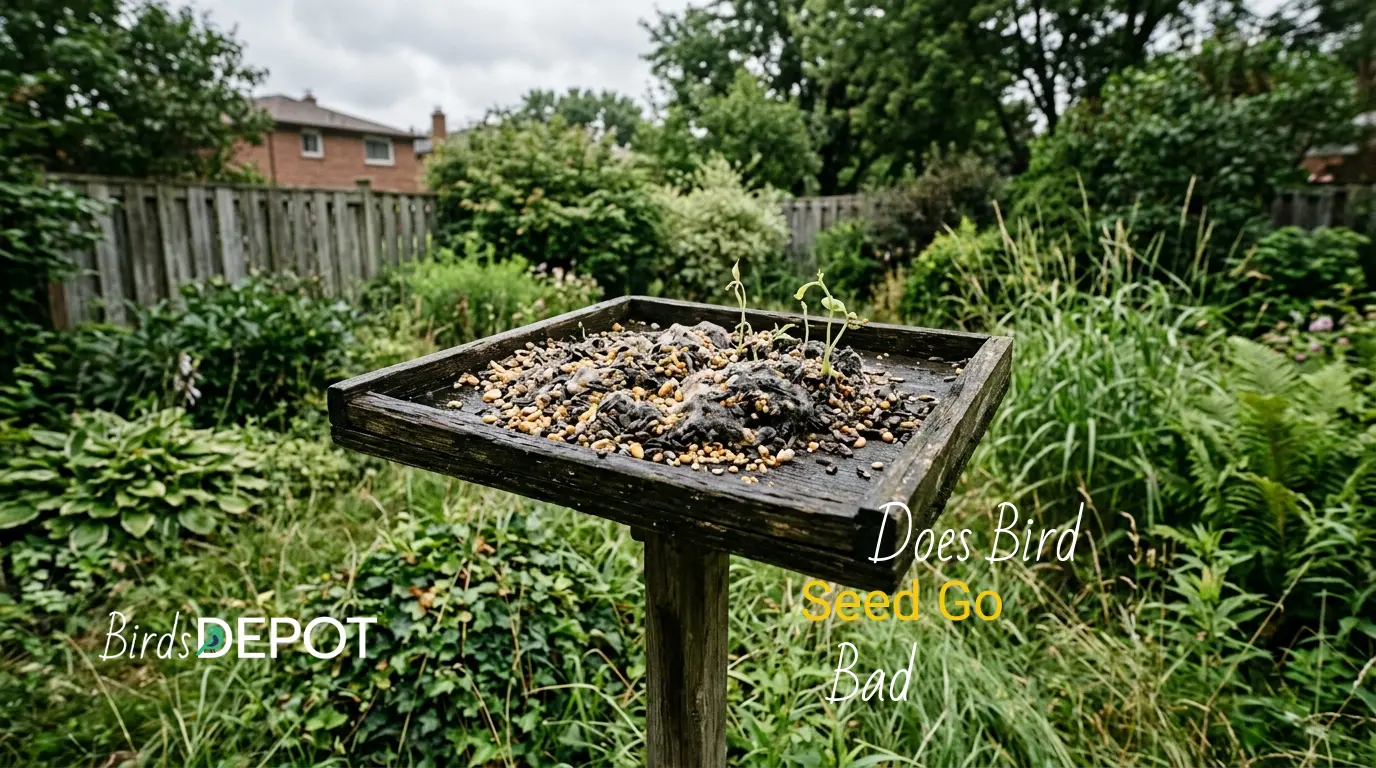
Last autumn I pulled out a half-used bag of nyjer seed I had stored in the garden shed since the previous winter. The birds had been ignoring my feeder for days, and I assumed it was just a quiet spell. On a whim, I opened a fresh bag and refilled the feeder. Within two days the goldfinches were back. The old seed was the problem, and I had wasted weeks waiting for birds that simply were not interested in what I was offering.
Does bird seed go bad? Yes, it does. And it causes more feeder problems than most people realize. This article covers shelf life by seed type, how to tell if seed has turned, what bad seed can do to birds, and how to store seed so it lasts.
Why Bird Seed Spoils
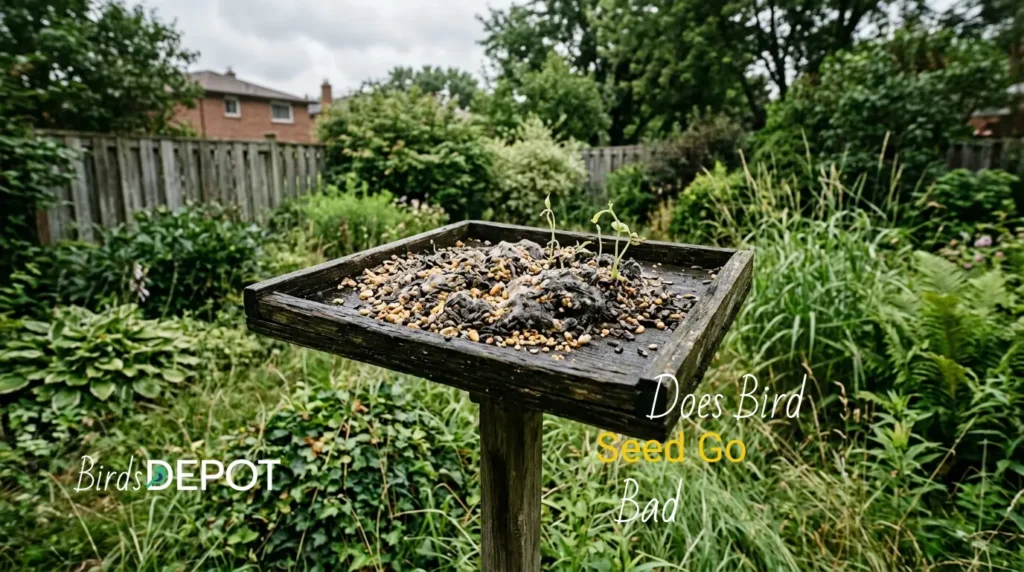
Seed is a natural product. It contains oils, fats, and moisture that break down over time, especially when exposed to heat, humidity, or rain. The oils in black oil sunflower seeds, for example, go rancid as they oxidize. Once that happens, the seed loses both its smell and its nutritional value. Birds rely heavily on scent and taste when selecting food, so rancid seed gets rejected fast.
Moisture is the bigger danger. Wet seed is a breeding ground for mould, fungus, and bacteria. A fellow birder in my local group told me she had lost an entire season of feeder visits because seed had clumped at the bottom of her tube feeder without her noticing. The mould had spread upward into the fresh seed she kept adding on top.
Insects are another issue. Grain moths and weevils can infest even freshly purchased seed. I have opened bags from the garden center and found tiny moths already inside. Once insects are present, the seed needs to go.
How Long Bird Seed Actually Lasts
Manufacturers often print a two-year expiry on bags, but that number assumes ideal storage conditions and an unopened bag. In practice, seed degrades faster than the label suggests.
Black oil sunflower seed stays fresh for roughly six to twelve months if stored properly. Nyjer (thistle) seed has a shorter window, around three to six months, because it is sterilized with heat during processing. That sterilization prevents sprouting, but it also makes the seed more fragile in storage. What kept coming up in birding forums when I researched this was that nyjer seed goes stale faster than almost any other seed, and many birders replace it every four to six weeks during active feeding seasons.
Mixed seed blends vary depending on what is in them. Seed with millet or safflower holds up reasonably well. Any blend with peanut pieces or dried fruit will degrade faster because of the fat content in peanuts and the sugar content in fruit.
Once a bag is opened and being used, most seed should be treated as fresh for no more than six months, and that assumes cool, dry storage. Seed left outside in a plastic bag through a warm, wet summer will be borderline within weeks.
How to Tell If Bird Seed Is Bad
The clearest sign is that birds stop eating it. If your feeder is being ignored and you have not changed anything else, the seed is the first thing to check. Birds should work through a feeder refill within two to three days during an active period. If seed is sitting untouched for longer, that is a signal.
Beyond bird behavior, there are physical signs to look for. Smell the seed first. Fresh seed has a faintly nutty, earthy smell. Rancid or moldy seed smells musty or sour. That smell test is fast and reliable.
Check for clumping. Seed that has absorbed moisture sticks together in clumps. Dry loose seed should flow freely. Any clumps mean moisture has got in, and the seed should come out of the feeder.
Look for mould directly. Fuzzy strands, grey or green patches, and a slimy texture on seeds are all signs of active mould growth. Check the bottom of the feeder especially. Seed jams in corners and base cracks, stays damp, and that is where mould starts. If the seed in the feeder looks fine on top but the bottom layer is matted and dark, the whole batch needs replacing.
Crack open a few black oil sunflower seeds and press the kernel. It should feel slightly oily between your fingers. Dry, chalky kernels that crumble mean the oils have degraded. Those seeds are still safe, but birds will not want them.
If seeds are sprouting, they got wet. Sprouting seeds are no longer nutritionally useful as bird food and should be removed.
Why Bad Seed Is a Real Problem for Birds
Some people assume birds will simply avoid seed that is off, so it is no big deal. That is partly true but not fully. Birds will avoid obviously rancid seed, but mould is more complicated. Moldy seed can contain aflatoxin, a mycotoxin that peer-reviewed surveys including Journal of Wildlife Diseases and Science of The Total Environment have found in wild bird seed at levels exceeding legal safety limits, and which researchers link to real illness and death in backyard birds.
Bacteria in wet, rotting seed can cause digestive illness in birds. Documented salmonella outbreaks at feeders include a multi-state 1998 songbird die-off confirmed by the USGS National Wildlife Health Center, and a 2020-2021 outbreak linked to pine siskins that the CDC traced to 30 human illnesses across 12 states. Poorly maintained feeders with bad seed are a contributing factor. If you find dead or visibly sick birds near your feeder, bad seed combined with a dirty feeder is one possible cause.
The risk is real enough that I clean my feeders every one to two weeks during heavy use, and I empty and replace seed rather than topping up over old stock.
How to Store Bird Seed So It Lasts
Use an airtight container
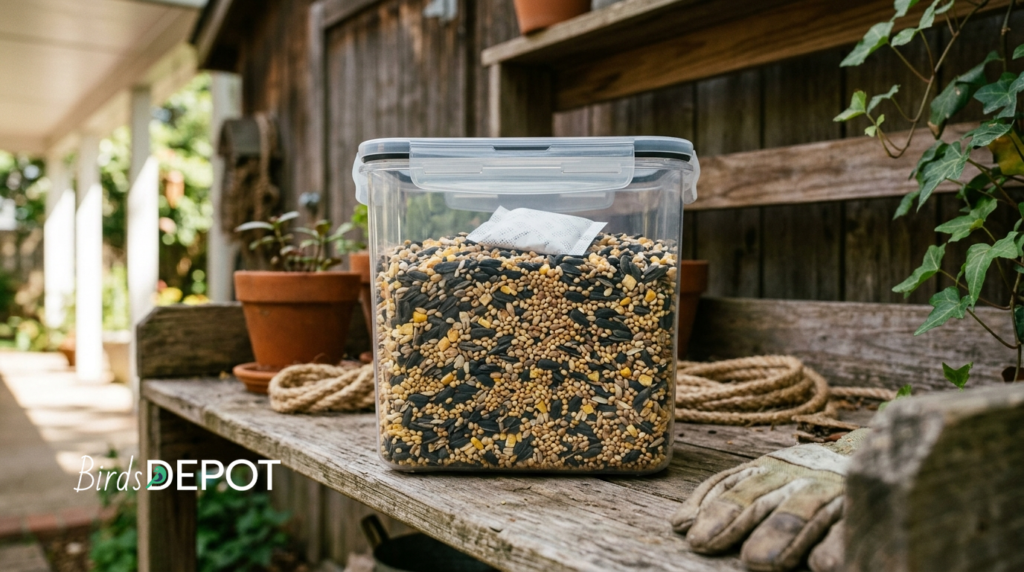
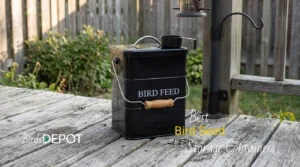
Transfer seed from the bag into a hard-sided container with a tight-fitting lid as soon as you get home. A galvanized metal bin with a locking lid is the best option. Metal keeps rodents out in a way that plastic cannot. Squirrels and mice will chew through plastic containers. I use a 20-liter galvanized bin from a farm supply store, which holds about two large bags of sunflower seed.
Store it somewhere cool and dry
A cool garage, a utility room, or a basement is better than an outdoor shed in summer. Heat accelerates the breakdown of oils in seed. Humidity promotes mould. Ideally, storage temperature should stay below 18°C (65°F). If you must store seed outside, keep the container off the ground and in shade, and accept that it will degrade faster.
Use older stock first
When you buy a new bag, use up the remaining old seed before opening the new one, as long as the old seed still passes the smell and visual check. Do not mix old and new seed in the same container. You will end up with the older seed sitting at the bottom indefinitely.
Buy in smaller quantities if your birds are slow eaters
Buying in bulk saves money but only if you can use the seed before it degrades. If you have one small feeder and light traffic, a 5kg bag is more practical than a 20kg one. I made the mistake early on of stocking up heavily in autumn, and by February the seed in the bottom of the bin was noticeably worse than what I had started with.
What to Do With Old Bird Seed
If the seed has mould or smells rancid, bin it. Do not compost it, as moldy seed can spread fungal spores. Do not scatter it on the ground either. Ground feeding with bad seed is worse than no feeding, because ground-feeding birds like sparrows and dunnocks will pick through it without the option to fly to a different feeder.
If the seed is simply old but still smells fine and shows no physical signs of spoilage, scatter a small amount on a dry patio slab and watch whether birds take it. If they pick it up readily, the seed is still usable. If they ignore it, it is done.
A plain option that several birders in my local group use is to spread old but uncontaminated seed thinly on a baking tray and leave it in a low oven for twenty minutes to dry it out. This works for seed that has absorbed a small amount of ambient moisture but has not yet molded. It is not worth doing with large quantities, but it saves a nearly-fresh bag that got damp.
Tips for Different Feeding Situations
Balcony birders
Feeders on balconies are more exposed to weather and harder to monitor daily. In wet weather, seed can go off in the feeder within three to four days. Use smaller feeders that you can empty and refill completely every few days rather than large hoppers that hold a week’s worth of seed. Tube feeders with metal ports dry out faster than wooden or plastic hoppers.
If you have multiple feeders
Rotate your cleaning schedule so all feeders get attention every week or two. The feeder that gets the least traffic is the one most likely to have old seed sitting in it. Less popular feeders should be filled with smaller amounts so seed does not sit for weeks. I have a ground tray that I now only fill on days I know I will be home to monitor it.
New birders just starting out
Start with black oil sunflower seed only. It is the most universally accepted seed, lasts reasonably well in storage, and it is easy to monitor. One simple tube feeder, filled with sunflower seed, tells you everything you need to know about your local bird traffic before you start experimenting with blends or nyjer. Getting familiar with how fast one seed type moves through your feeder makes it much easier to spot when something is wrong.
Troubleshooting
Birds visited once and then stopped coming
This happens when seed goes off quickly in a new feeder. Check whether the feeder is positioned in direct sun. Heat accelerates spoilage, and a feeder in full afternoon sun can turn nyjer seed in under a week in summer. Move it to partial shade and reduce the fill quantity until you find a volume that gets eaten within two to three days.
You replaced the seed, but birds still will not eat from the feeder
The feeder itself is probably the problem. Old seed residue, especially mould in cracks and base ports, will contaminate fresh seed within days. Take the feeder apart completely, soak it in a solution of one part bleach to nine parts water for ten minutes, rinse thoroughly, and let it dry completely before refilling. A feeder that smells of mould will put birds off even with fresh seed inside.
Does bad seed attract mice?
Yes, and this is a real concern. Spilled seed below feeders, especially mixed seed with millet and corn, attracts mice and rats regardless of whether the seed is fresh or old. Bad seed that falls to the ground is no more or less attractive to rodents than fresh seed. The fix is the same either way: use a seed tray to catch fallen seed, sweep up regularly, and avoid mixes with large quantities of millet if rodents are a problem in your area.
Keeping seed fresh is less complicated than it sounds once the storage habits are in place. A metal bin, cool storage, regular feeder cleaning, and buying quantities you can actually use within a few months cover most of the problem. I wasted about half a season of feeder visits before I took seed freshness seriously. Now I empty my feeders completely once a week and fill them with smaller amounts, and the difference in bird activity has been noticeable.
This winter I am planning to track exactly how fast each seed type moves through my feeders week by week. I want to know whether nyjer genuinely lasts longer in my covered feeder than in the open one, or whether that is just something I have assumed without testing it properly.
Frequently Asked Questions
In dry conditions, most seed stays fresh in a feeder for about a week. In wet or humid weather, it can go off within three to four days. A good rule of thumb is to fill feeders with only as much seed as the birds will eat in two to three days, and empty and refill rather than topping up over old seed.
Usually not. Birds are good at detecting rancid or stale seed and will avoid feeders where the seed has gone off. If your feeder is being ignored and nothing else has changed, the seed is the first thing to suspect. Replace the seed and clean the feeder before refilling.
Moldy seed shows fuzzy strands or patches in grey, green, or black. The seeds may stick together in clumps and feel slimy. It often smells musty or sour. Check the bottom and corners of your feeder especially, as that is where moisture collects and mould starts. Do not feed moldy seed to birds.