

I’ll never forget the morning I missed a beautiful shot. A brilliant male indigo bunting had landed on a perfect perch, backlit by golden sunrise light streaming through my balcony garden. My camera was mounted, my settings dialed in, but as I reached for the pan control, my cheap ball head slipped, just half an inch, but enough to throw the composition completely off. By the time I frantically readjusted, he was gone. I stood there, heart sinking, staring at my tripod in frustration.
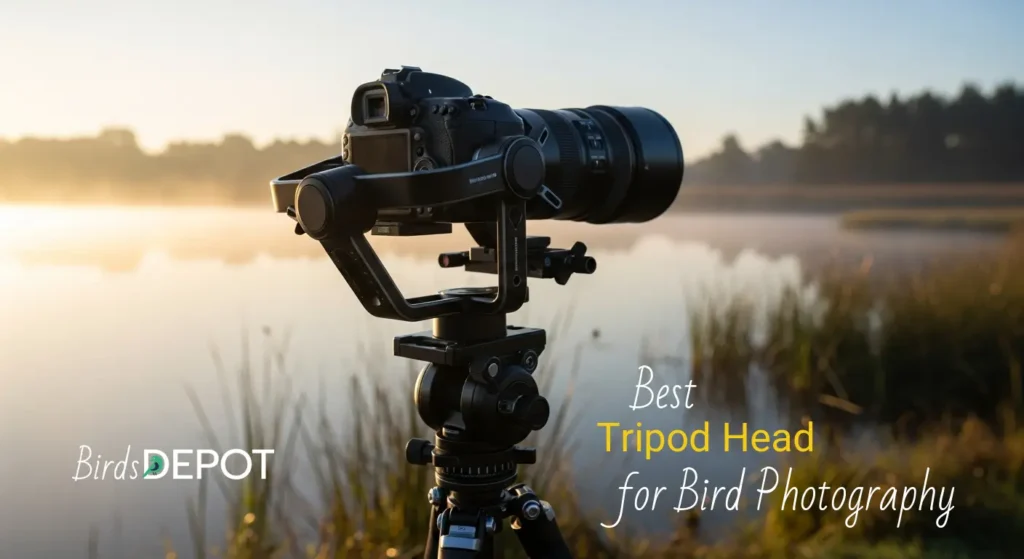
That moment changed everything about how I approach bird photography. I realized that investing in quality gear isn’t about chasing the latest trends. It’s about not missing those irreplaceable moments when nature grants you a gift. Over the past two years, I’ve tested dozens of tripod heads and put these tools through real-world conditions.
If you’re serious about capturing sharp, beautifully composed images of our feathered friends, choosing the best tripod head for bird photography is absolutely critical. This guide will walk you through exactly what to look for and share my top five recommendations based on extensive personal testing and research.
How to Chose The Best Tripod Head for Bird Photography
Before we dive into specific products, let’s talk about what truly matters when selecting a tripod head for wildlife photography. Bird photography presents unique challenges that set it apart from other genres. You need equipment that can keep up with sudden movements while maintaining rock-solid stability for those crucial moments of stillness.
- Head Type and Movement Control: There are three main types to consider: ball heads, geared heads, and gimbal heads. Ball heads offer quick, fluid adjustments perfect for tracking moving subjects. Geared heads provide ultra-precise, micro-adjustments that excel in controlled environments where you’re fine-tuning composition for a stationary subject. Gimbal heads (not covered in this article) are specialized for heavy telephoto lenses. For most bird photographers, a quality ball head strikes the perfect balance between speed and precision.
- Load Capacity and Stability: This is non-negotiable. Your tripod head must comfortably support the combined weight of your camera body and lens, especially if you’re using a telephoto lens. I always recommend choosing a head rated for at least 1.5 times your actual gear weight. Vibration and micro-movements are the enemy of sharp images, particularly when shooting at 400mm or beyond. Look for solid construction materials like aluminum alloy or magnesium.
- Smoothness and Damping: When you’re tracking a bird in flight or following one hopping along branches, you need buttery-smooth movement without jerky transitions. Quality damping systems prevent sudden drops when you loosen controls. Nothing is more terrifying than feeling your expensive camera setup suddenly plunge because of poor damping.
- Quick Release System: Bird photography often requires rapid setup and repositioning. An Arca-Swiss compatible quick release plate is the industry standard and allows you to swap between tripod, monopod, or handheld shooting in seconds. This compatibility also means you can use the same plate across different support systems, which is incredibly convenient when you’re moving between your balcony setup and field photography.
- Precision Adjustments and Locking: Look for independent control knobs that allow you to adjust and lock different axes separately. This is crucial when you’ve got your horizontal composition perfect but need to make a tiny vertical adjustment. Multiple locking points and friction controls give you the flexibility to work quickly while maintaining stability. Bubble levels are also essential for ensuring your horizon line stays straight, especially important in landscape-style bird photography.
- Build Quality and Weather Resistance: Bird photography happens in all conditions, from morning dew to light rain and dusty fields. Your tripod head needs to withstand these elements without corroding or seizing up.
- Weight and Portability: If you’re only shooting from your balcony or backyard, weight might not matter much. But for those of us who hike to birding locations or travel to different habitats, every ounce counts. The best tripod head for bird photography balances robust construction with reasonable portability.
Top Picks At-a-Glance
Our Top Picks for Best Tripod Head for Bird Photography
- Manfrotto XPRO Ball Head with 200PL Quick Release PlateBest Premium Ball Head for Bird Photography
- Benro 3-Way Geared Head (GD3WH)Best Precision Geared Head for Composed Shots
- Neewer Professional Metal 360 Degree Rotating Panoramic Ball HeadBest Budget-Friendly Ball Head
- K&F CONCEPT 3-Way Geared Tripod HeadBest Value Geared Head for Precision Work
- NEEWER 77 inch Camera Tripod with Ball HeadBest Complete Tripod System for Beginners
The 5 Best Tripod Heads for Bird Photography: Detailed Reviews

Manfrotto XPRO Ball Head
Best Premium Ball Head for Bird Photography
Lightweight magnesium ball head with triple locking system that holds up to 15kg while weighing only 0.52kg for superior performance and precision.
Pros
- Exceptional 15kg load capacity despite ultra-light 0.52kg weight
- Triple locking system eliminates vibrations and maintains precise framing
- Compatible with widely-used 200PL plate system
Cons
- Premium price point may exceed budget for casual photographers
- Requires familiarity with Manfrotto’s plate system
The Manfrotto XPRO operates on a sophisticated ball-and-socket design with three independent locking mechanisms. Unlike cheaper ball heads that use a single control knob, this system allows you to adjust friction independently from the main lock. When tracking a bird, you can set the friction to allow smooth panning while maintaining enough resistance to prevent drooping. The 360-degree rotation is marked with degree indicators, making it perfect for creating panoramic compositions when you want to capture a bird within its habitat context. The leveling bubble ensures your horizon stays true, which is crucial when photographing shorebirds or waterfowl, where the water line needs to be perfectly level.
This is where the Manfrotto truly shines and justifies its premium positioning. The magnesium alloy construction achieves something remarkable: it’s incredibly lightweight (just over half a kilogram) yet supports up to 15kg of equipment. I’ve had mine mounted with a full-frame DSLR and a 400mm lens without any hint of sag or instability. The machining is impeccable as every surface is smooth, every adjustment precise. The triple block system isn’t just marketing speak; it genuinely eliminates the annoying “click” feedback you get with cheaper ball heads, resulting in smoother micro-adjustments and zero vibration transfer.
I upgraded to the Manfrotto XPRO after two seasons of frustration with mid-range ball heads, and it was transformative. Last spring, I spent three mornings photographing a nesting pair of Eastern Bluebirds, and the XPRO’s precision allowed me to make tiny compositional adjustments without disturbing my setup. The real test came during a windy day when I was photographing goldfinches at my balcony feeder. Lesser heads would have transmitted every gust into visible shake, but the XPRO’s damping system and solid lock kept everything rock-steady. The quick release system means I can swap from my telephoto setup to my wider landscape lens in under ten seconds when I want to capture habitat shots.
Manfrotto has designed this head with longevity in mind. The sealed ball mechanism resists dust and moisture intrusion, which is essential for those early morning shoots when everything is covered in dew. I clean mine every few months by simply wiping down the exterior with a microfiber cloth and occasionally applying a tiny amount of lubricant to the locking knobs. The 200PL plate system is brilliantly simple, a single screw mechanism that’s tool-free and can be operated even with cold fingers during winter bird photography sessions.
Who is this for?
The Manfrotto XPRO is ideal for serious bird photographers who have invested in quality camera gear and need a tripod head that matches their equipment’s capabilities, particularly those shooting with mid-to-heavy telephoto lenses and demanding precision without compromise.

Benro 3-Way Geared Head
Best Precision Geared Head for Composed Shots
Ultra-precise geared head with three independent axes, magnesium-alloy body, and Arca-Swiss compatibility for ultimate control in architectural and landscape bird photography.
Pros
- Three independent geared axes provide millimeter-level precision adjustments
- Premium magnesium-alloy construction with carbon steel and bronze gearing
- Three bubble levels ensure perfect alignment in all axes
- Extended 5-year warranty with online registration
Cons
- Slower operation compared to ball heads—not ideal for fast-moving subjects
- Heavier than ball heads at 1.91 pounds
The Benro GD3WH represents a completely different approach to tripod head design. Instead of a ball-and-socket system, it uses three separate geared mechanisms, one each for tilt, pan, and lateral movement. Each axis has its own precision knob that allows you to make micro-adjustments measured in millimeters. When you turn a knob, internal gearing translates your movement into ultra-fine camera positioning. This is absolutely brilliant for stationary subjects where you’re composing carefully. Think of a heron standing perfectly still in shallow water, or a hawk perched on a distant snag, situations where you have time to craft the perfect composition and need to shift your frame just slightly to balance elements.
Benro has clearly prioritized quality with this geared head. The magnesium-alloy body keeps weight reasonable while maintaining rigidity, and the internal gearing uses carbon steel and bronze for smooth, reliable operation.
The Arca-Swiss style quick release plate (PU70) is substantial and locks securely with a large, easy-to-operate lever. The three bubble levels (one for each axis plus a circular level on top) make it incredibly easy to ensure perfect alignment, which is crucial when you’re shooting from uneven terrain.
I initially bought the Benro for architecture photography, but it quickly became my go-to for certain bird photography scenarios. When I’m photographing birds at my feeding station from inside my house, where I can set up carefully and wait, the geared head is unbeatable. However, I’ll be honest: when a flock of Cedar Waxwings descended on my serviceberry bush and started moving frantically, I wished I had my ball head. Geared heads require patience and deliberate operation.
The Benro is remarkably low-maintenance thanks to its sealed gearing system. The gears themselves are maintenance-free; Benro has done an excellent job of protecting them from the elements. The 5-year warranty (with registration) provides peace of mind that this is a long-term investment.
Who is this for?
The Benro 3-Way Geared Head is perfect for bird photographers who focus on stationary subjects and value compositional precision above speed—particularly those who enjoy the methodical process of landscape-style bird photography where every element must be perfectly placed.

Neewer Professional Ball Head
Best Budget-Friendly Ball Head
Affordable 360-degree ball head with three adjustment knobs, Arca-type quick release, and fine tuning damping that supports up to 17.6 pounds of camera gear.
Pros
- Exceptional value with impressive 17.6-pound load capacity
- Three independent adjustment knobs for versatile angle control
- Arca-type quick release plate with horizontal and vertical bubble levels
- Fine tuning damping system prevents sudden drops
Cons
- Heavier than premium options at 15.5 ounces
- Not as smooth as higher-end ball heads during micro-adjustments
The Neewer ball head operates on a straightforward yet effective ball-and-socket design enhanced by three separate control knobs. The main knob controls the primary ball lock, allowing you to loosen for repositioning and then lock down for stability. A second knob controls the panoramic base rotation, brilliant for tracking a bird moving horizontally along a branch or following flight paths. The third knob adjusts friction independently, which is where this head really impresses for its price point. You can set just enough resistance to prevent your camera from drooping when the main lock is loosened, but still allow smooth tracking movements. The 360-degree rotation with index markings helps when you’re creating panoramic sequences or need to return to specific angles.
For a budget-friendly option, the Neewer is surprisingly well-constructed. The metal body feels solid, better than plastic alternatives. At 15.5 ounces, it’s reasonably portable, though not the lightest option available. The 17.6-pound load capacity is genuinely impressive and means it can easily handle most DSLR and telephoto lens combinations. The Arca-type quick-release plate is a huge advantage at this price point, providing compatibility with a wide range of other equipment. The dual bubble levels (horizontal and vertical) are clear and easy to read even in low light.
The damping system genuinely works as I never experienced the heart-stopping plunge that some budget ball heads are notorious for. I’ve successfully used it with my full-frame camera and 300mm lens without stability issues. The smoothness isn’t quite at the level of premium heads; you’ll notice slightly more resistance during ultra-fine adjustments, but for the price, it’s absolutely remarkable.
The quick-release mechanism should be kept clean of debris to ensure smooth operation. One tip: the main ball can collect dust over time, so occasionally loosening all controls and wiping the ball with a microfiber cloth keeps everything operating smoothly. The head doesn’t come with a protective case, so store it in a padded bag to prevent scratches and impacts during transport.
Who is this for?
The Neewer Professional Ball Head is ideal for beginning bird photographers who want reliable performance and professional features without breaking the bank, or as an excellent backup head for experienced photographers who need a second setup.

K&F CONCEPT Geared Head
Best Value Geared Head for Precision Work
Precision geared head with high-precision micrometric knobs, full CNC aluminum alloy construction, and 13.2-pound load capacity for demanding photography scenarios.
Pros
- High-precision micrometric knobs for millimeter-level adjustments
- Excellent CNC aluminum alloy construction at a value price point
- Efficient one-step positioning with fine gear tuning
- Wide compatibility with 3/8″ and 1/4″ mounting options
Cons
- Slightly lower customer ratings (4.2 stars) compared to competitors
- May require break-in period for smoothest operation
The K&F CONCEPT geared head employs a three-axis geared system similar in concept to the Benro, but with its own engineering approach. Each axis features high-precision micrometric knobs that provide independent control over tilt, pan, and lateral movement. The gear ratios are designed for what K&F calls “one-step positioning”, meaning you can achieve your desired composition more efficiently with fewer adjustment cycles. The damping feels substantial and controlled, preventing over-rotation and allowing you to dial in precise positions confidently. This is particularly valuable when you’re photographing backyard birds at feeders and want to frame the shot perfectly while waiting for your subject to arrive.
K&F CONCEPT has invested in full CNC (Computer Numerical Control) machining for this head, which results in very precise tolerances and a refined appearance. The aluminum alloy construction strikes a good balance between strength and weight at 1.78 pounds. While not quite as light as magnesium alternatives, it’s still reasonable for field work. The 13.2-pound load capacity is adequate for most bird photography setups, though those with very heavy super-telephoto lenses might want to consider the higher capacity options. It is compatible with virtually any DSLR or mirrorless camera. The base features a standard 3/8″ thread, ensuring compatibility with professional tripods.
One advantage of the CNC construction is that the precision-machined parts tend to resist wear better than cast alternatives. I apply a tiny amount of appropriate lubricant to the knobs every couple of months to keep operation smooth, but the head hasn’t required any significant maintenance during my testing period.
Who is this for?
The K&F CONCEPT 3-Way Geared Head is perfect for budget-conscious bird photographers who want the precision of a geared system without the premium price tag—especially those who photograph primarily from fixed positions like yards, balconies, or blinds.

NEEWER 77 inch Tripod System
Best Complete Tripod System for Beginners
Versatile complete tripod system with 360-degree panoramic ball head, convertible monopod leg, and adjustable height from 19 to 77 inches with 34-pound load capacity.
Pros
- Complete system includes tripod, ball head, and carrying bag
- Impressive 34-pound load capacity with ultra-stable aluminum construction
- Converts from tripod to monopod for versatile shooting options
- Wide height range (19″ to 77″) accommodates various shooting scenarios
- Inverted center column enables low-angle and macro photography
Cons
- Heavier than head-only options at 3.12 pounds total weight
- Ball head, while functional, is not as refined as dedicated premium heads
While this is technically a complete tripod system rather than just a head, I’m including it because it represents exceptional value for beginning bird photographers who need everything at once. The 36mm ball head features 360-degree rotation with two independent control knobs. One for the main ball lock and one for the panoramic base. This dual-control system allows you to pan smoothly while keeping your vertical framing locked, which is useful when tracking birds along a horizontal path. The unique two-section center column design extends the maximum height while maintaining stability, and the inverted column option opens up creative low-angle possibilities for photographing ground-feeding birds.
The NEEWER tripod system is constructed from aluminum alloy throughout, providing excellent stability while keeping weight reasonable at 3.53 pounds net weight. The 34-pound load capacity is frankly overkill for most bird photography setups, but it means you have absolute confidence in stability even with heavy gear. The four-section legs use quick-pull flip-type locks that are fast and secure, allowing height adjustments from 19 to 77 inches in seconds. The three-level opening angle system helps stabilize the tripod on uneven terrain crucial when you’re photographing shorebirds on beaches or wading birds in wetlands. The bubble level on the ball head assists with horizontal alignment, and the center column features a hook for adding weight (like a sandbag) for extra stability in windy conditions.
I recommended this system to a friend who was just getting serious about bird photography. She used it for photographing migrating warblers—setting it up at full height for canopy-level shots, then collapsing it low for ground-feeding sparrows. The monopod conversion feature proved invaluable during a visit to a local wildlife refuge where we needed to move quickly between locations. The ball head isn’t as buttery-smooth as my Manfrotto, but it’s entirely adequate for learning and producing quality images. The included carrying bag makes transportation convenient, and the compact folded size (19 inches) fits in my car trunk alongside other gear.
Who is this for?
The NEEWER 77-inch tripod system is ideal for beginning bird photographers who want a complete, reliable setup that won’t limit their growth—or for experienced photographers who need a versatile travel system that can handle multiple shooting scenarios.
Final Verdict: My Top Pick
After extensive testing and countless hours photographing everything from tiny warblers to majestic herons, my recommendations come down to matching the right tool to your specific needs and budget.
- For Premium Performance: If you’re serious about bird photography and have invested in quality camera gear, the Manfrotto XPRO Ball Head is absolutely worth the investment. Its combination of lightweight construction, exceptional load capacity, and buttery-smooth operation makes it the gold standard for wildlife photography. The triple locking system genuinely eliminates vibrations, and the quick response time means you won’t miss shots due to equipment limitations.
- For Precision Work: When you’re photographing stationary subjects and composition is paramount, the Benro 3-Way Geared Head delivers millimeter-level control that ball heads simply cannot match. The premium construction and 5-year warranty make it a long-term investment for photographers who value methodical, deliberate composition.
- For Budget-Conscious Quality: The Neewer Professional Ball Head offers remarkable value, delivering features typically found on heads costing twice as much. It’s perfect for photographers starting their journey or those who need a reliable backup without compromising on essential features like Arca-Swiss compatibility and adequate load capacity.
- For Precision on a Budget: If you want the control of a geared head without the premium price, the K&F CONCEPT 3-Way Geared Head delivers impressive precision at a value price point. It’s ideal for photographers who shoot primarily from fixed positions and have time to compose carefully.
- For Complete Beginners: The NEEWER 77-inch Tripod System provides everything you need to start bird photography seriously. The versatility of having both tripod and monopod options, combined with a capable ball head, makes this an exceptional foundation that won’t hold you back as your skills develop.
My Best in Show Pick: If I could only keep one head in my kit, it would be the Manfrotto XPRO Ball Head. After two years of regular use across countless shooting scenarios it has never let me down. The combination of speed, precision, and rock-solid stability makes it the ultimate tool for bird photography. Yes, it’s an investment, but it’s one that pays dividends every time you capture that perfect moment.
Remember, choosing the best tripod head for bird photography isn’t about finding the most expensive option it’s about finding the right tool for how you photograph. Consider your typical shooting scenarios, your gear weight, and whether you prioritize speed or precision. Whatever you choose from this list, you’ll be taking a significant step toward capturing sharper, better-composed images of the birds that bring us so much joy. Now get out there and create something beautiful.
Frequently Asked Questions (FAQ)
A ball head uses a ball-and-socket mechanism that allows quick, fluid adjustments in any direction, making it perfect for tracking moving birds or rapidly changing compositions. A geared head uses three separate geared mechanisms for ultra-precise, incremental adjustments in each axis, ideal for carefully composed shots of stationary subjects. Most bird photographers find ball heads more versatile for general use, while geared heads excel in specific scenarios like photographing birds at feeders or perched subjects where you have time to perfect the composition.
Absolutely. Arca-Swiss has become the industry standard quick-release system because of its reliability and universal compatibility. Having an Arca-Swiss compatible head means you can use the same plate across different tripods, monopods, and accessories without constantly swapping plates or carrying multiple systems. It also allows for incredibly quick camera mounting and removal
