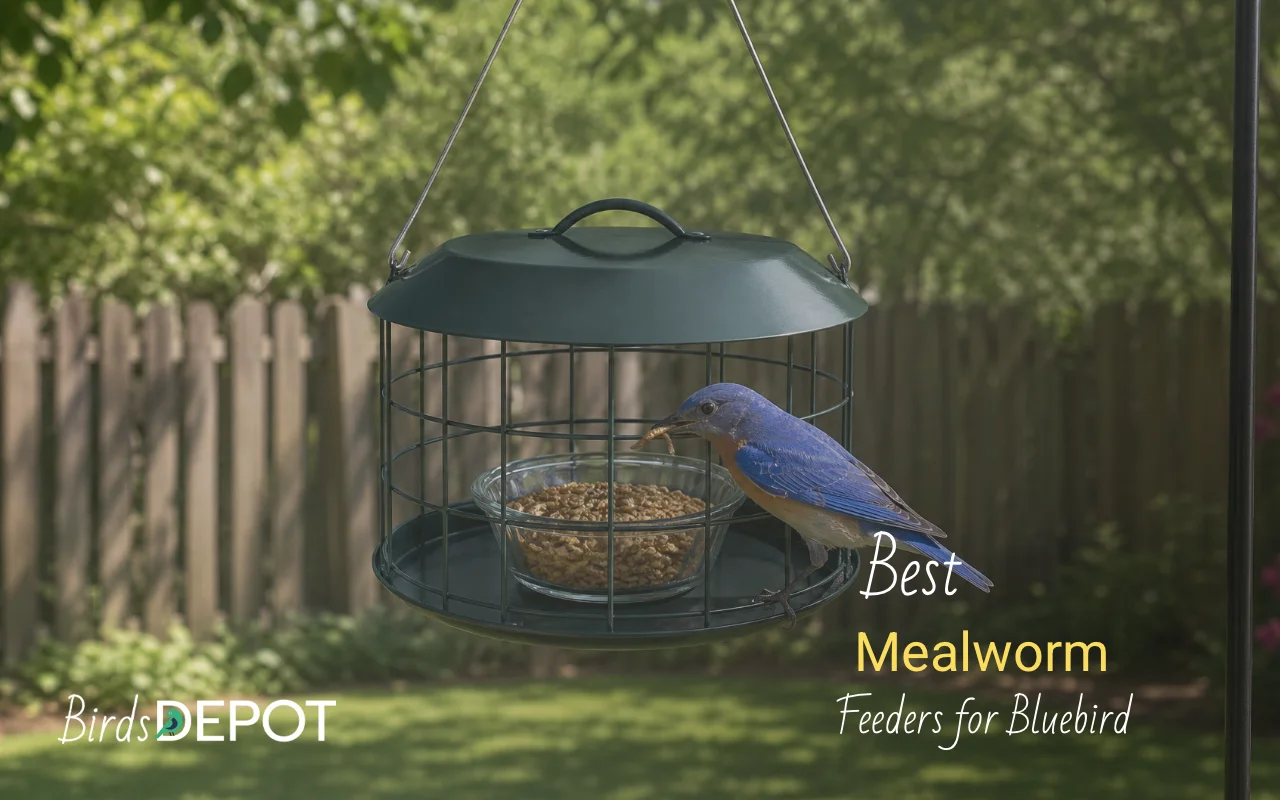
I was refilling my kitchen window feeder one morning when I noticed something odd. A bluebird hovered near the glass for a few seconds, then flew off. I’d been putting out mealworms in a standard seed feeder, and they were disappearing fast, but not to bluebirds. Starlings and house sparrows were cleaning me out before the bluebirds even got a chance.
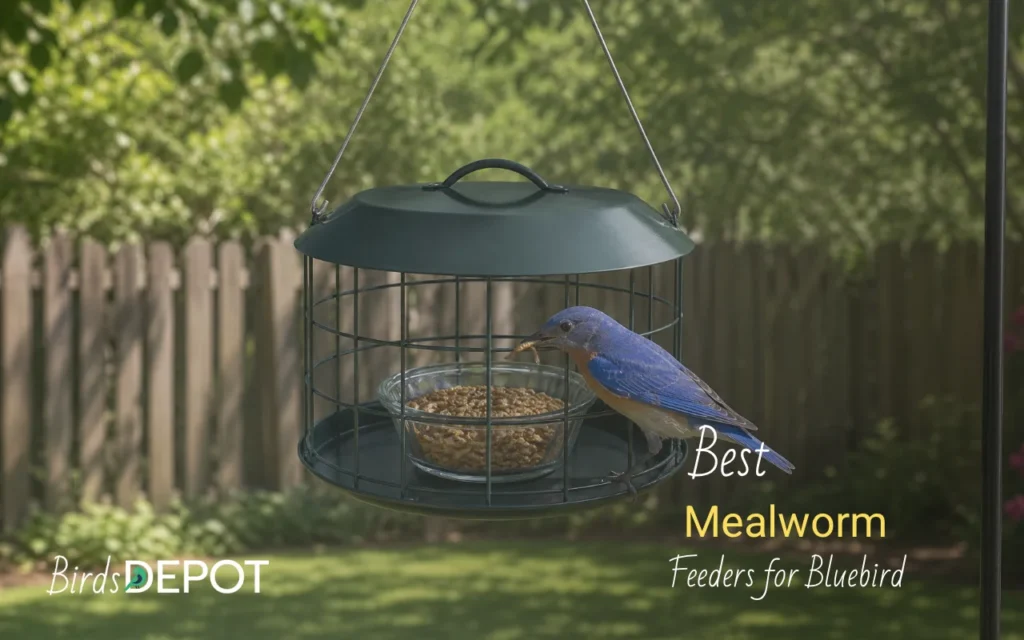
That’s when I realized I needed a feeder designed specifically for bluebirds. I now own two bluebird mealworm feeders: the Kingsyard caged model and the Nature Anywhere window feeder. Both work, but they solve different problems. I also spent weeks comparing platform feeders and tube designs before I bought anything. I read through hundreds of buyer reviews, checked what the birding community recommended, and looked closely at what separates a good bluebird feeder from one that just feeds every bird in the neighborhood.
Here’s what I learned.
Key Considerations for Choosing a Bluebird Mealworm Feeder
- Mechanism and Access Control: Bluebirds are small cavity nesters. They’re comfortable entering through narrow openings that larger, more aggressive birds avoid. Look for caged designs with 1.5-inch openings or platform feeders with protective domes. Standard open trays will attract starlings, grackles, and house sparrows before bluebirds even arrive.
- Durability and Weather Resistance: Mealworms spoil fast when wet. Metal construction with powder coating holds up better than plastic in direct sun and rain. Check for rust-proof materials if you live somewhere humid. Acrylic works for window feeders because it stays dry under eaves, but it won’t survive outdoor exposure without cracking.
- Ease of Cleaning and Refilling: Bluebirds are picky about spoiled food. You’ll need to clean the feeder every few days, especially in summer. Look for removable trays or lift-off lids. If you have to unscrew four bolts just to wipe it down, you won’t do it often enough.
- Drainage and Ventilation: Mealworms turn to mush in standing water. Drainage holes in the base tray are non-negotiable. Some feeders also have vented roofs to keep air moving, which helps prevent mold.
- Squirrel Resistance: Squirrels will chew through cheap plastic and knock over lightweight feeders. Metal cages or weight-activated mechanisms are the only reliable options. Window feeders bypass the problem entirely since squirrels can’t climb glass.
Top Picks for Best Bluebird Mealworm Feeder
- Kingsyard Caged Bluebird FeederBest for Squirrel Resistance
- Nature Anywhere Window FeederBest for Close-Up Viewing
- Kingsyard Adjustable Platform FeederBest for Multiple Bird Species
- Jealoeur Retractable FeederBest Large Capacity Option
- Squirrel Proof 360° Tray FeederBest Weight-Activated Design
The 5 Best Bluebird Mealworm Feeder: Detailed Reviews

Kingsyard Caged Bluebird Feeder
Best for Squirrel Resistance
All-metal caged design keeps squirrels out while bluebirds feed comfortably on mealworms
Pros
- 1.5-inch openings block squirrels and larger birds
- Rust-proof powder coating holds up in all weather
- Bottom tray catches scattered mealworms and drains water
Cons
- Glass bowl requires careful handling during cleaning
The cage surrounds a removable glass bowl. Bluebirds slip through the 1.5-inch openings to reach the mealworms inside. Squirrels can’t squeeze through, and larger birds like starlings struggle to get a good angle. The bottom tray catches any mealworms that fall through and has drainage holes to keep everything dry.
The frame is all metal with an anti-rust powder coating. The blue finish mimics natural tones, which seems to help birds approach without hesitation. The glass bowl sits snugly in the base and lifts out for refills. The tray underneath is also metal, so nothing here will crack or warp in direct sun.
The first morning I hung this feeder, a male bluebird landed on the cage edge and peered inside for a solid ten seconds before hopping through the opening. He grabbed a mealworm and left. By the third day, I think he was bringing a mate. I fill the bowl with dried mealworms every other morning, and it stays full enough to keep them coming back without attracting a crowd.
Lift the top lid, pull out the glass bowl, rinse it, and you’re done. Takes about two minutes. The tray underneath needs a wipe every few days to clear out hulls or wet mealworms. The drainage holes work, but you still need to check after heavy rain.
Who is this for?
Anyone dealing with squirrels or aggressive birds who want a feeder that only bluebirds can access comfortably.

Nature Anywhere Window Feeder
Best for Close-Up Viewing
Transparent acrylic window feeder with heavy-duty suction cups for up-close bluebird watching
Pros
- Suction cups hold firm in all weather
- Squirrels can’t reach it on glass
- Clear acrylic gives unobstructed view of feeding birds
Cons
- Requires a clean, flat window surface for suction
Four heavy-duty suction cups press the feeder flat against your window. Birds land on the perch, hop inside the clear tray, and feed. You watch from inches away. The patented air circulation system keeps seeds and mealworms dry even in humid weather.
The acrylic is thick enough to handle outdoor conditions without cracking. The suction cups use EverGrip X4 technology, which means they don’t pop off in temperature swings or rain. I’ve had mine up through two winters and one brutal summer. It hasn’t budged.
I mounted this on my kitchen window facing the backyard. A pair of bluebirds found it within a week. The female landed first, tilted her head to check the mealworms, then hopped in. I was washing dishes and froze mid-scrub. She was less than a foot from my face, completely unbothered. Now they visit three or four times a day, and I can see every detail. The rust on her chest, the way she flicks her tail before grabbing a worm.
Pull the feeder off the window, dump the tray, rinse it in the sink, and reattach. Takes about ninety seconds. No screws, no tools, no disassembly.
Who is this for?
Anyone who wants to watch bluebirds feed from arm’s length without stepping outside.

Kingsyard Adjustable Platform Feeder
Best for Multiple Bird Species
Adjustable height platform with rain dome and anti-squirrel spinning top for bluebirds and other wild birds
Pros
- Adjustable height controls which birds can access the tray
- Spinning top discourages squirrels
- Built-in drainage holes keep seeds fresh
Cons
- Open design allows larger birds to feed if height isn’t adjusted correctly
The platform tray hangs below a clear rain dome. You adjust the height of the dome by sliding it up or down the hanging cable. Lower it to restrict access to smaller birds like bluebirds. Raise it to welcome cardinals and doves. If a squirrel tries to sit on the dome, the top spins and throws them off balance.
The base is rust-proof metal with drainage holes stamped into the tray. The dome is clear plastic, thick enough to block rain but light enough to spin freely when weight lands on it. The whole feeder balances well even in wind.
Why I Almost Bought This
What kept coming up in reviews was how versatile this feeder is. Buyers consistently mentioned adjusting the height throughout the season to match migration patterns. Bluebirds in spring, cardinals in summer, doves in fall. The spec that caught my attention was the spinning squirrel deterrent, which seemed more reliable than weight-activated systems. I chose the caged feeder instead because I wanted something that exclusively served bluebirds without any adjustments or guesswork.
Lift the dome, dump the tray, rinse it, and snap everything back together. The drainage holes work well, but you’ll still need to scrub out mealworm residue every few days.
Who is this for?
Birders who want one feeder that accommodates bluebirds and other species without buying separate setups.
Jealoeur Retractable Feeder
Best Large Capacity Option
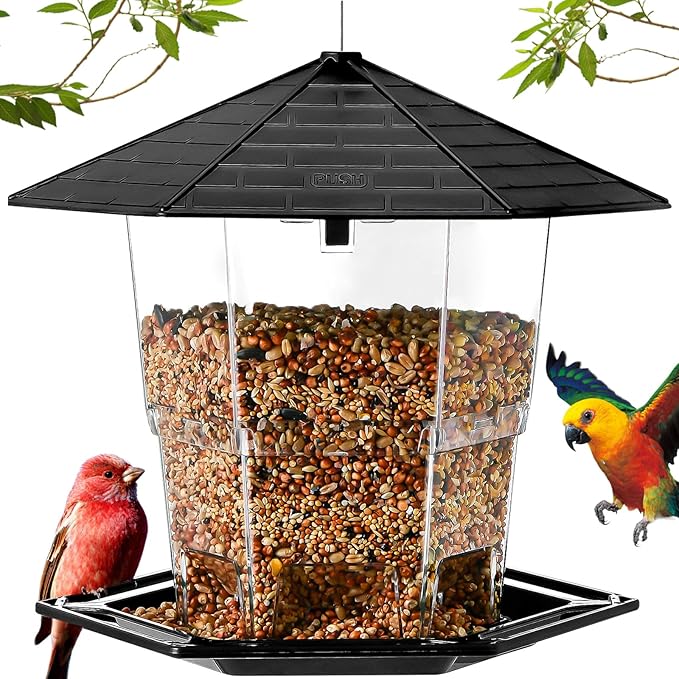
Retractable design with 2.2-pound seed capacity and easy latch feature for quick refilling
Pros
- Holds 2.2 pounds of seed or mealworms
- Latch feature makes refilling fast
- Hexagonal roof shades birds from sun and rain
Cons
- Plastic construction may crack in extreme cold
Press the latch button on the lid, fill the chamber with seeds or mealworms, and close it. As birds eat from the tray, more food slides down automatically to refill the feeding area. The hexagonal roof keeps rain off the tray and provides shade.
The body is durable plastic, which keeps the weight down but won’t hold up as long as metal in harsh weather. The lid latches securely, and the tray sits at the base with enough room for multiple birds to perch. At 8.7 x 7.6 x 7.8 inches, it’s compact enough to hang under an eave without taking up too much space.
Why I Almost Bought This
The spec that caught my attention was the 2.2-pound capacity. I refill feeders every other day, and the idea of stretching that to a week was appealing. What kept coming up in reviews was how easy the latch system made refilling — one hand, five seconds, done. I chose differently because I wanted metal construction, and I wasn’t sure how well the plastic would hold up through a full year outdoors.
Pop the latch, lift the lid, and dump the chamber. The tray pulls out for scrubbing. Takes about three minutes. The automatic refill feature means less frequent maintenance, but you’ll still need to check for mold if mealworms sit too long in humid weather.
Who is this for?
Anyone who wants a high-capacity feeder that requires minimal refilling and doesn’t mind trading metal durability for lighter weight.
Squirrel Proof 360° Tray Feeder
Best Weight-Activated Design
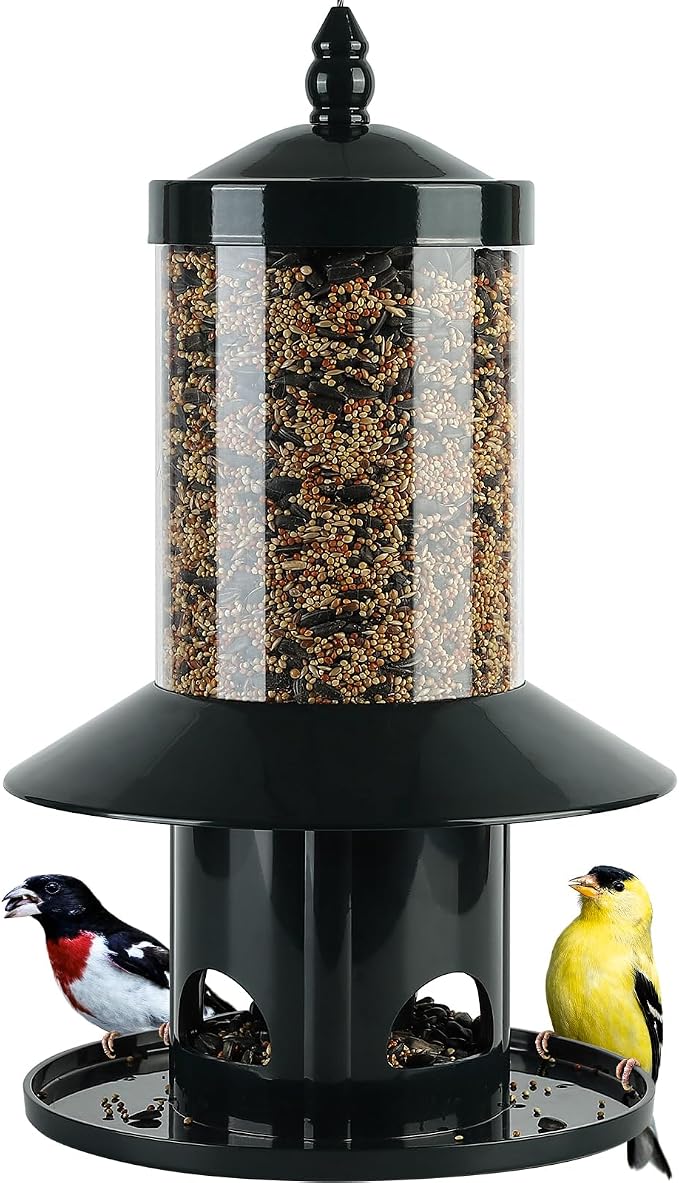
Weight-sensitive mechanism closes feeding ports when squirrels land, with 360-degree perch tray for wild birds
Pros
- Weight-activated ports close when squirrels jump on
- 360-degree tray reduces seed waste
- Rainproof roof keeps mealworms and seeds dry
Cons
- Mechanism may need adjustment to calibrate for smaller birds
The feeding ports stay open when lightweight birds land on the perch. When a squirrel jumps on, the added weight triggers the ports to close automatically. The 360-degree tray catches any spilled seeds or mealworms, which keeps the ground clean and reduces waste. The rainproof roof keeps everything dry.
The frame is built tough for outdoor use, with a steel cable suspension system. The roof slides up and locks in place when you press a button, making one-handed refills simple. The tray wraps all the way around the base, so birds can perch from any angle.
Why I Almost Bought This
What kept coming up in reviews was how well the weight-activated system worked once buyers calibrated it correctly. The 360-degree tray caught my attention because it meant less cleanup under the feeder. Buyers consistently mentioned how much seed they saved by keeping it off the ground. I chose differently because I wanted a feeder that didn’t require any calibration or adjustment — something that worked perfectly for bluebirds right out of the box.
Press the button, slide the roof up, refill the chamber, and lock it back. The tray lifts off for rinsing. Takes about two minutes. The roof keeps mealworms dry, so you won’t be scrubbing mold as often.
Who is this for?
Anyone dealing with persistent squirrels who want a weight-activated system that keeps the ground clean without manual adjustments.
Final Verdict: My Top Pick
- If squirrels are your biggest problem, the Kingsyard Caged Bluebird Feeder shuts them out completely. The 1.5-inch openings work.
- If you want to watch bluebirds feed from inches away, the Nature Anywhere Window Feeder gives you the best view you’ll ever get.
- If you want one feeder that serves bluebirds and other species, the Kingsyard Adjustable Platform Feeder lets you control access by height.
- If you need high capacity and hate refilling constantly, the Jealoeur Retractable Feeder holds 2.2 pounds and refills itself as birds eat.
- If you want a weight-activated squirrel deterrent with minimal waste, the Squirrel Proof 360° Tray Feeder keeps the ground clean.
My overall pick is the Kingsyard Caged Bluebird Feeder. It does exactly what it’s supposed to do: keeps squirrels and aggressive birds out while giving bluebirds easy access. The metal construction holds up, the drainage works, and cleaning takes two minutes. If you want bluebirds and only bluebirds, this is the one to buy.
How to make a bluebird feeder?
If you like to decorate and invite bluebirds into your yard with your own DIY project by making a bluebird feeder, then watch the video to learn how to do it.
How to grow mealworms for bluebirds?
Mealworms are bluebird’s most favorite food, but in the market, those insects are also expensive. So, if you can grow and farm mealworms, it can efficiently reduce your extra expenses.
You don’t need any special tools to farm mealworms. A single bucket or box with a top cover and a little bit of patience is enough to make a simple, small farm.
Look out for the following video to get the step-by-step process of how you can farm mealworms in a small box.
Frequently Asked Questions
Anywhere from a few days to two weeks. Bluebirds are territorial and patrol their range regularly. If you place the feeder near natural perches like fence posts or low branches, they’ll spot it faster. Keep it stocked, and they’ll figure it out.
Open areas with a clear flight path work best. Bluebirds prefer feeders that they can approach from multiple angles without flying through dense branches. Mount it five to six feet off the ground, and keep it at least ten feet away from thick shrubs where predators hide.
Yes. Bluebirds prefer live mealworms, especially during nesting season when they need high-protein food for their young. Live worms don’t last as long in the feeder, so you’ll need to refill more often. Dried mealworms work fine and store better if you’re not home every day.